
Downspout inspection is one of the most overlooked steps in protecting a home’s foundation, yet it often prevents thousands of dollars in water damage. Homeowners across the Bay Area tend to focus on roofs and gutters while ignoring the pipes that actually carry water away from the house. However, a cracked, clogged, or poorly aimed downspout can quietly send water toward a foundation for months before anyone notices a problem.
Direct answer: Downspout inspection is a check of the vertical pipes attached to gutters, confirming they are unclogged, securely connected, and routing rainwater at least five to ten feet away from a home’s foundation, walls, and crawlspace.
What Is a Downspout Inspection?
A downspout inspection evaluates every component of a home’s vertical drainage pipes, from the gutter outlet down to the final discharge point. Inspectors check for clogs, loose joints, rust, and whether extensions actually move water away from the structure. In particular, the review often includes the splash blocks or underground drain lines that carry runoff the final stretch away from the house.
This process is usually bundled into a broader exterior inspection that also covers rain gutters, rooflines, and stucco or paint surfaces. Consequently, buyers and sellers get a complete picture of how well a property manages rainwater, rather than looking at gutters in isolation.
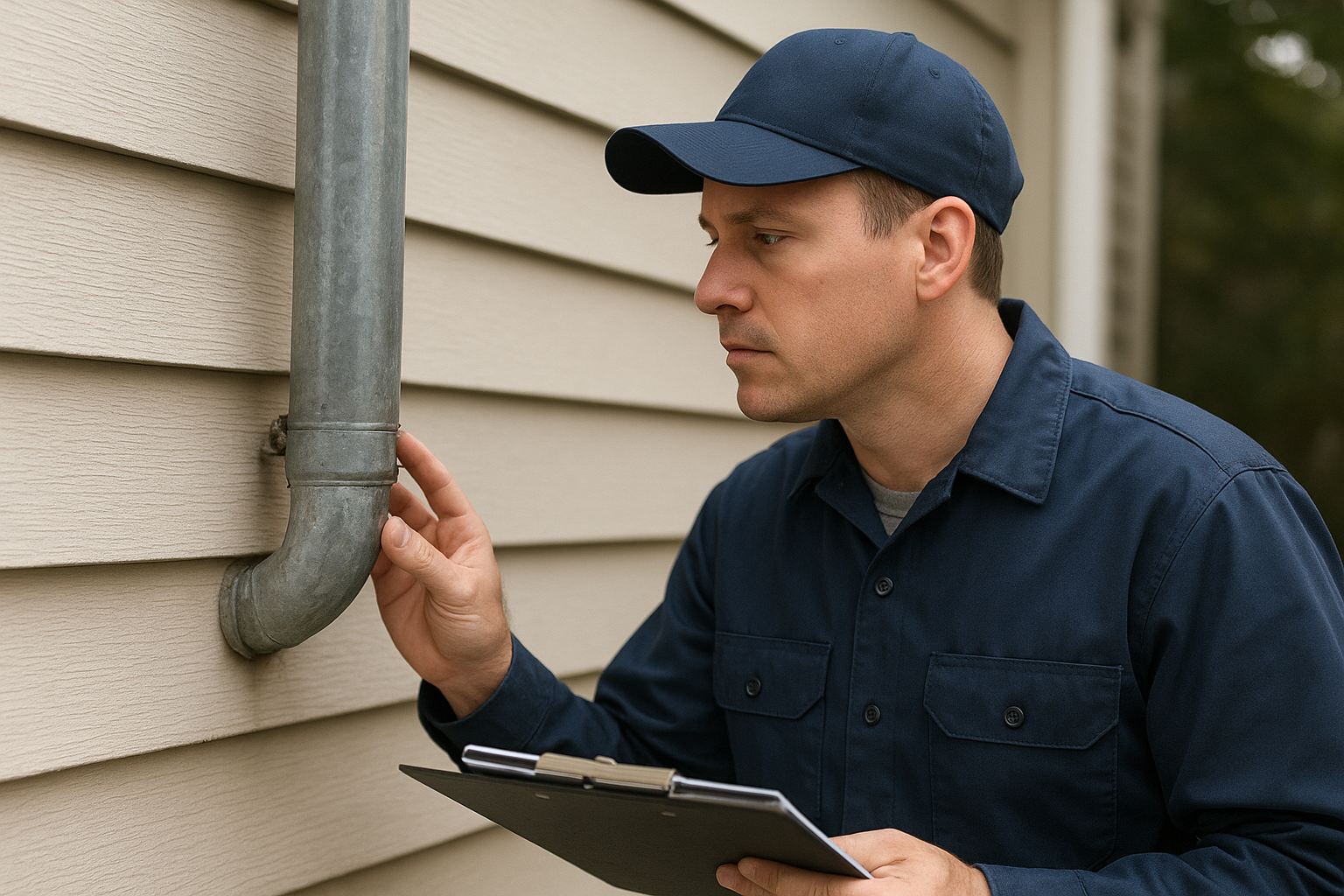
A professional downspout inspection checks every connection point for leaks, rust, and loose fittings.
Why Gutter and Drainage Inspection Matters So Much
Water is patient, and that is exactly why drainage inspection deserves attention. A roof can shed thousands of gallons during a single storm, and if that water is not directed properly, it pools against the foundation instead of flowing safely into the yard or storm system. Over time, this saturation softens soil, which can lead to settling, cracked slabs, or a damp crawlspace.
The Federal Emergency Management Agency (FEMA) notes that clogged or misdirected downspouts are among the leading contributors to residential water intrusion, often resulting in costly foundation and crawlspace repairs. As a result, a routine inspection pays for itself many times over by catching small drainage flaws before they become structural ones.
In addition, real estate agents frequently rely on inspection findings to guide negotiations. A well-documented report from a service like the real estate agents’ resource center helps both sides understand what repairs are reasonable versus cosmetic.
Signs You Need a Downspout Inspection Soon
Certain warning signs suggest a drainage problem long before a major repair is needed. For example, water pooling near the foundation after rain, visible rust streaks down siding, or sagging downspout sections all point to trouble. Similarly, peeling exterior paint or white mineral deposits, known as efflorescence, near a downspout often signal chronic moisture exposure.
Homeowners should also pay attention to sound. A gurgling or overflowing noise during rainfall usually means a clog is forcing water to spill over the gutter edge instead of flowing through the downspout. Above all, any of these signs justify scheduling an inspection promptly rather than waiting for the next storm season.
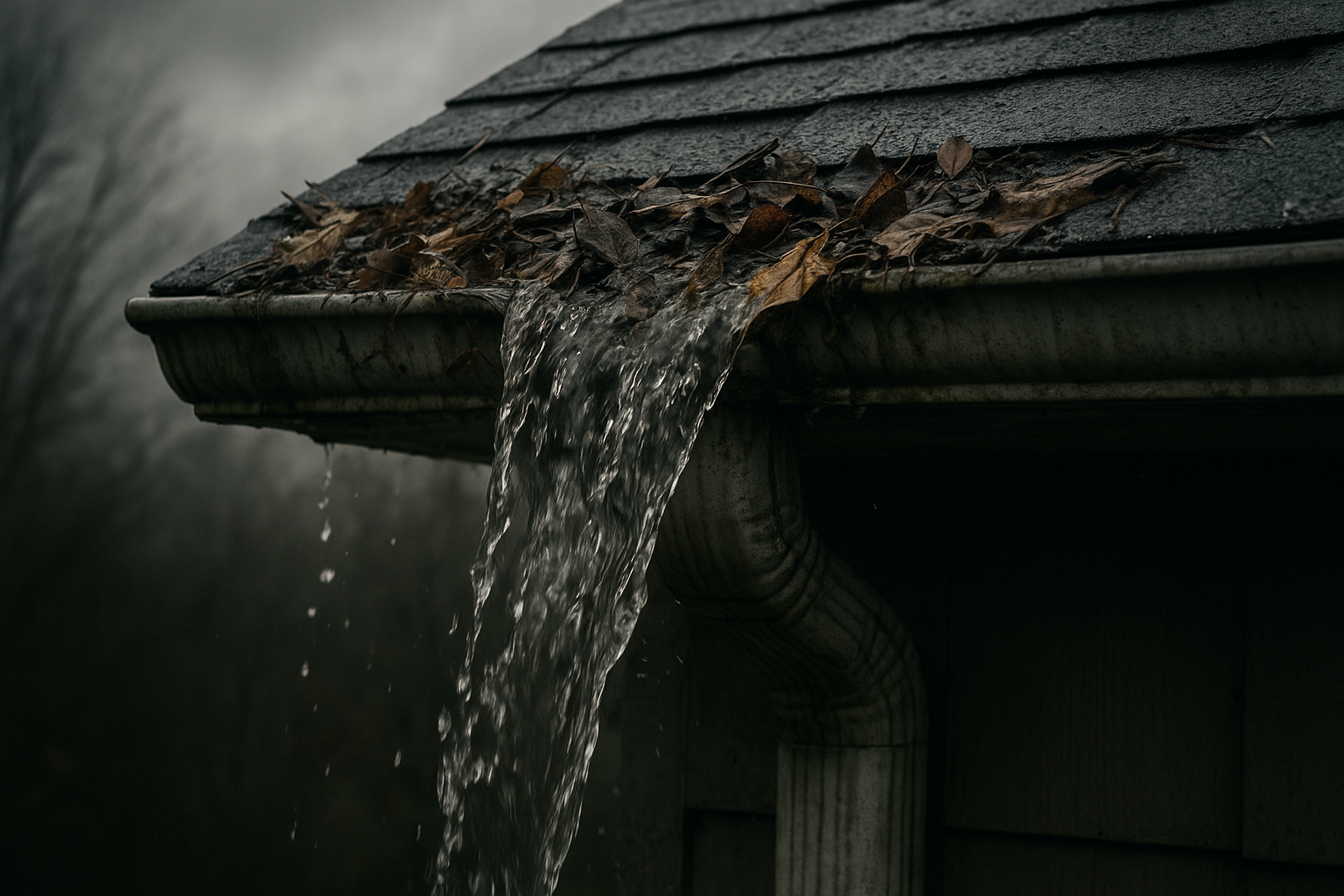
Overflowing water at a gutter corner is a common early warning sign noticed during downspout inspection.
What Happens During a Professional Downspout Inspection
A professional inspector follows a consistent sequence so nothing gets missed. Specifically, the process typically includes these steps:
- Walk the exterior perimeter — inspect every downspout for dents, disconnected joints, or sections pulling away from the wall.
- Check the gutters feeding each downspout — look for debris, sagging, or rust that could restrict water flow upstream.
- Trace the discharge point — confirm extensions or drain lines carry runoff at least five to ten feet from the foundation.
- Inspect grading and soil near discharge points — check for pooling, erosion, or negative slope directing water back toward the house.
- Document findings with photos — record defect locations and recommended repairs for the written report.
Many inspectors also run a garden hose test to simulate rainfall, which lets them watch water move through the system in real time. This simple technique often reveals hidden clogs that a dry visual check would miss entirely.
Common Downspout Problems Found During Inspections
Certain issues show up again and again across different homes. Debris clogs from leaves and roofing grit are the most frequent culprit, followed by disconnected extensions that get knocked loose during landscaping or lawn mowing. Rust holes in metal downspouts and cracked plastic elbows are also common, particularly on older homes.
Another frequent finding is a downspout that empties directly against the foundation instead of away from it. This setup might look fine on a dry day, but it concentrates water exactly where a home is most vulnerable. For reference, resources like the Wikipedia overview of rain gutter systems explain how gutters and downspouts are meant to function as one connected system.
How Often Should Downspout Inspection Happen?
Most homes benefit from a visual downspout check twice a year, ideally in spring after pollen season and in fall after leaves drop. Properties shaded by large trees may need quarterly attention since debris accumulates faster. Meanwhile, a full professional inspection makes sense during any home purchase, sale, or when adding a new tenant to a rental unit.
The U.S. Environmental Protection Agency (EPA) recommends keeping downspout extensions clear and properly directed as part of routine home water management, since even small blockages can redirect significant volumes of runoff. For more detail on seasonal maintenance, the EPA’s guidance on managing roof runoff at epa.gov is a helpful outside reference.
Downspout Inspection for Buyers, Sellers, and Rental Owners
For home buyers, a drainage review during a buyer’s inspection can reveal whether foundation moisture issues are likely before closing. Sellers, on the other hand, often choose a pre-listing inspection to fix minor downspout flaws before buyers ever see them, which keeps negotiations smoother.
Property managers overseeing rentals face a slightly different challenge, since tenants rarely report drainage problems until visible damage appears. Scheduling drainage checks as part of a broader rental property inspection at move-in, move-out, and periodic intervals helps catch issues while they are still inexpensive to fix. Industry guidance from the International Association of Certified Home Inspectors also stresses that drainage components should be checked annually regardless of occupancy status, which supports this routine approach.
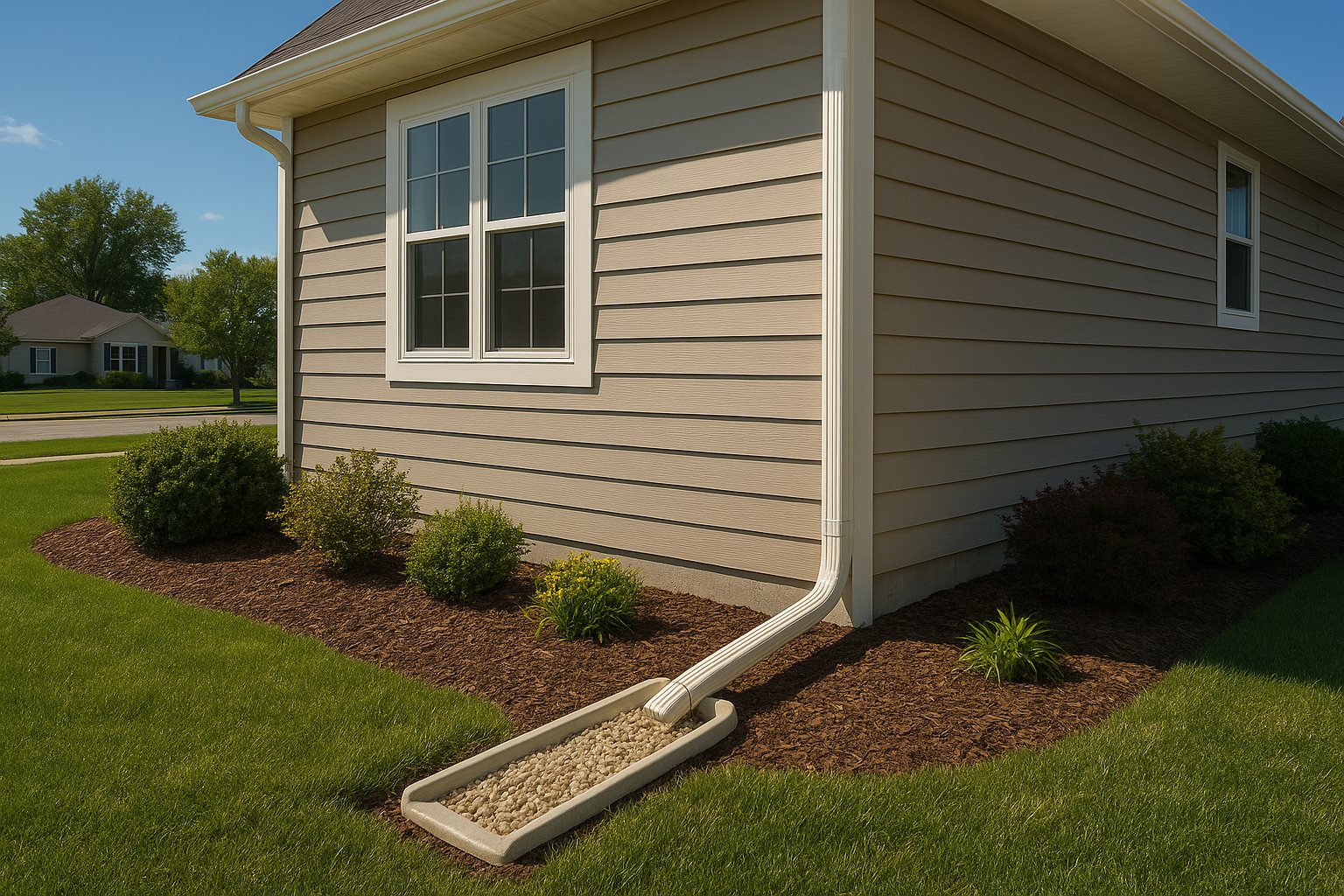
A properly extended downspout routes water well away from the foundation, a key focus of any downspout inspection.
DIY Checks vs a Professional Downspout Inspection
Homeowners can absolutely handle basic checks themselves. Specifically, clearing debris by hand, confirming extensions are attached, and watching where water lands during a storm are all simple tasks anyone can do a few times a year.
That said, a professional brings tools and experience that catch subtler problems, such as hidden foundation moisture, improper slope, or deterioration inside a downspout that is not visible from the ground. Combining a homeowner’s regular maintenance habit with an occasional professional review, such as those offered through 21centuryhomeinspection.com, gives the most complete protection for a home’s structure.
Visual learners can also review real inspection walkthroughs on the inspection video library, which shows exactly what a trained eye looks for around gutters and downspouts.
Frequently Asked Questions About Downspout Inspection
What is a downspout inspection?
A downspout inspection is a check of the pipes that carry rainwater from your gutters down to the ground, confirming they are intact, unclogged, and directing water away from the foundation. Inspectors also look at the connection points, extensions, and splash blocks.
Why does downspout inspection matter for home buyers?
Poor downspout drainage is a common hidden cause of foundation cracks, basement moisture, and crawlspace rot. Catching these issues before closing can save a buyer thousands in repair costs.
How often should downspouts be inspected?
Most homes benefit from a visual downspout check twice a year, typically in spring and fall, plus a professional inspection during any home purchase or sale. Homes surrounded by trees may need quarterly checks.
What are signs a downspout needs inspection or repair?
Watch for pooling water near the foundation, rust streaks, sagging sections, or water overflowing during rain. Peeling paint or efflorescence on exterior walls near a downspout is another red flag.
Can a clogged downspout damage a foundation?
Yes, a clogged downspout forces water to overflow near the foundation instead of draining away, which can saturate soil and cause settling or cracking over time. Consistent overflow is one of the most common triggers of foundation repair claims.
How much does a professional downspout inspection cost?
A standalone downspout and gutter check is often included in a full home inspection at no extra charge, while a dedicated visit from a specialty contractor may run $75 to $200. Costs vary by region and roof complexity.
How long does a downspout inspection take?
A standalone downspout inspection usually takes 15 to 30 minutes for an average single-family home. When bundled into a full home inspection, it adds only a few minutes to the overall visit.
What is the difference between a gutter inspection and a downspout inspection?
A gutter inspection focuses on the horizontal channels collecting roof runoff, while a downspout inspection focuses on the vertical pipes and extensions that carry that water to the ground. Both are usually reviewed together since they work as one drainage system.
What mistakes do homeowners make with downspouts?
Common mistakes include letting downspouts empty right next to the foundation, skipping debris cleaning, and ignoring disconnected extensions after landscaping work. These oversights quietly undermine an otherwise healthy drainage system.
Should downspouts drain into the ground or away from the house?
Downspouts should discharge water at least 5 to 10 feet away from the foundation, either onto a splash block, into a drain line, or toward a graded slope. Draining directly against the foundation defeats the purpose of the gutter system.
Can downspout problems affect a home sale?
Yes, inspection reports noting drainage defects can slow negotiations or prompt buyers to request repairs or credits. A pre-listing inspection that addresses downspout issues early helps sellers avoid last-minute surprises.
Do rental properties need downspout inspections?
Yes, rental property owners should check downspouts during move-in, move-out, and periodic inspections since tenants rarely report drainage issues until damage is visible. Regular checks help landlords avoid costly structural repairs between leases.
What tools do inspectors use during a downspout inspection?
Inspectors typically use a flashlight, moisture meter, ladder, and sometimes a garden hose to simulate rainfall and observe water flow in real time. Photos are taken to document any defects found.
Can I inspect my own downspouts without a professional?
Homeowners can do a basic visual check for clogs, disconnections, and pooling water, but a professional inspection can spot subtler issues like hidden foundation moisture or improper slope. Combining both approaches gives the most complete picture. Readers with more questions can browse the general inspection FAQ page for additional guidance.
Final Thoughts on Downspout Inspection
In summary, downspout inspection is a small task with an outsized impact on a home’s long-term health. Regular checks catch clogs, disconnected pipes, and poor discharge points before they turn into foundation cracks or crawlspace moisture. Whether a homeowner is buying, selling, or managing a rental, scheduling a professional review alongside routine seasonal maintenance remains one of the most cost-effective ways to protect a property from water damage.


