
An electrical panel inspection is one of the most important checks a home inspector performs, since the breaker box controls power for the entire house and hides most of its wear from plain view. Whether you are buying, selling, or managing a rental property, understanding what happens during this inspection can help you avoid costly surprises and serious safety risks.
Quick answer: An electrical panel inspection is a visual and functional review of a home’s breaker box, checking wiring, breakers, grounding, and signs of overheating. A qualified inspector typically completes this check in 15 to 30 minutes as part of a full home inspection.
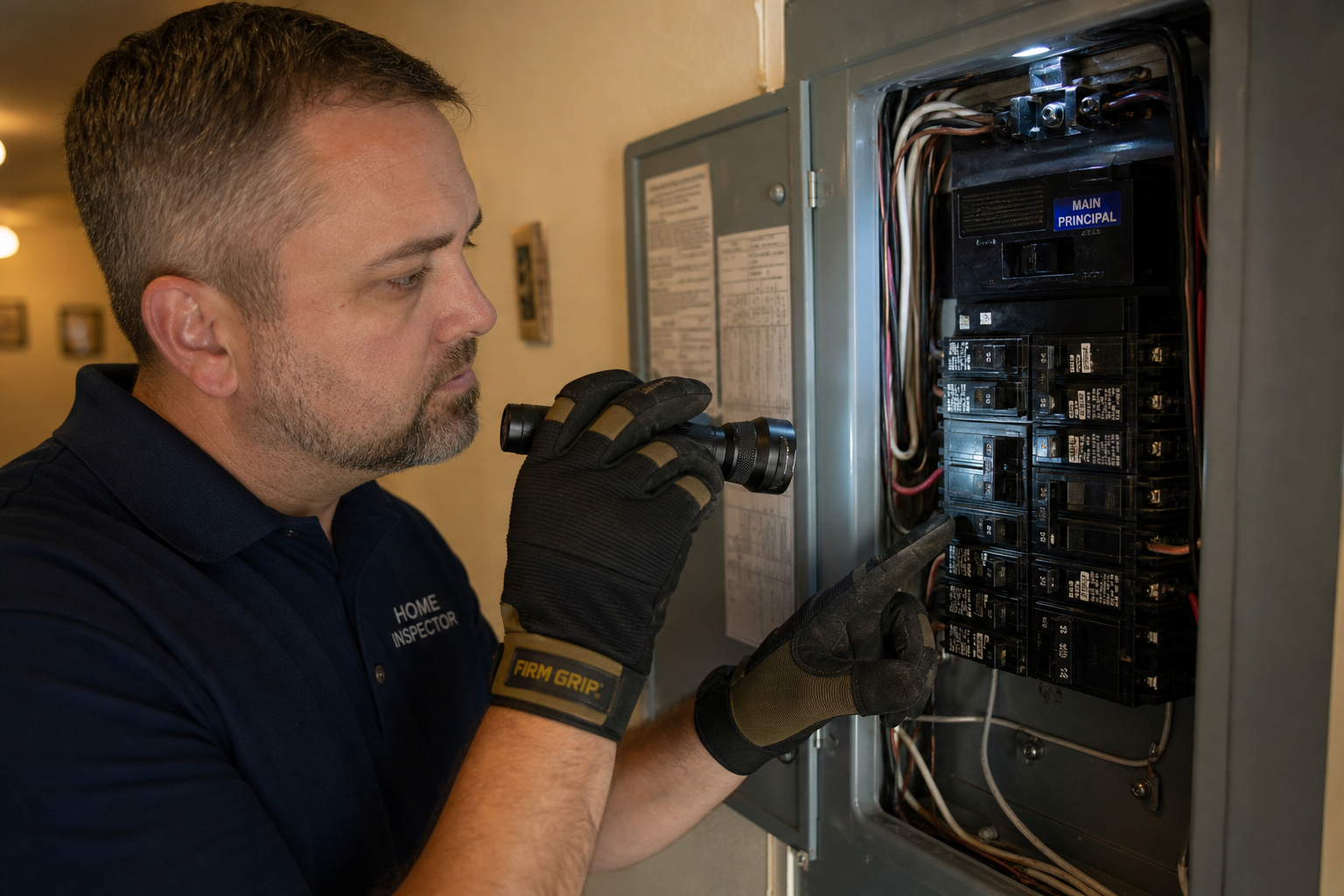
A thorough electrical panel inspection checks wiring, breakers, and grounding for safety.
What Is an Electrical Panel Inspection?
An electrical panel inspection is a focused examination of the breaker box, also called a distribution board, that distributes electricity throughout a home. Specifically, the inspector opens the panel cover and checks the wiring, breaker condition, grounding, and labeling against current safety standards.
In addition, inspectors look for outdated or recalled panel brands, double-tapped breakers, and signs of overheating such as scorch marks or melted insulation. Because the panel is central to every circuit in the house, even small defects here can signal larger wiring problems elsewhere.
Why a Home Electrical Panel Check Matters
Electrical issues are not just an inconvenience; they are a leading cause of residential fires. According to data compiled by the National Fire Protection Association, electrical failures or malfunctions consistently rank among the top causes of home structure fires in the United States each year.
As a result, a panel safety inspection gives buyers, sellers, and landlords a clear picture of risk before it becomes an expensive problem. For example, a homeowner who ignores a tripping breaker for months may be masking a failing connection that eventually overheats.
Furthermore, insurance companies increasingly request proof of panel condition before issuing or renewing homeowner policies in older properties. Therefore, having documentation from a recent inspection can simplify both the sale process and future insurance underwriting.
What Happens During an Electrical Panel Inspection
Specifically, a professional inspector follows a consistent process to evaluate the panel safely and thoroughly. Below is the typical sequence used during a residential electrical panel inspection.
- Exterior and visual assessment: The inspector checks the panel’s location, required clearance space, and exterior condition for rust, corrosion, or physical damage before opening anything.
- Panel cover removal: After safely removing the dead front cover, the inspector reviews wiring connections and breaker types for signs of overheating or scorching.
- Breaker and circuit testing: Each breaker is checked for proper function, correct amperage, and labeling accuracy that matches its assigned circuit.
- Grounding and bonding check: The inspector confirms the system has proper grounding and bonding connections that meet code requirements.
- Documentation and reporting: Findings are photographed and written into a report with clear repair or replacement recommendations.
Consequently, this structured approach ensures nothing important gets overlooked, even in panels that look fine at first glance.
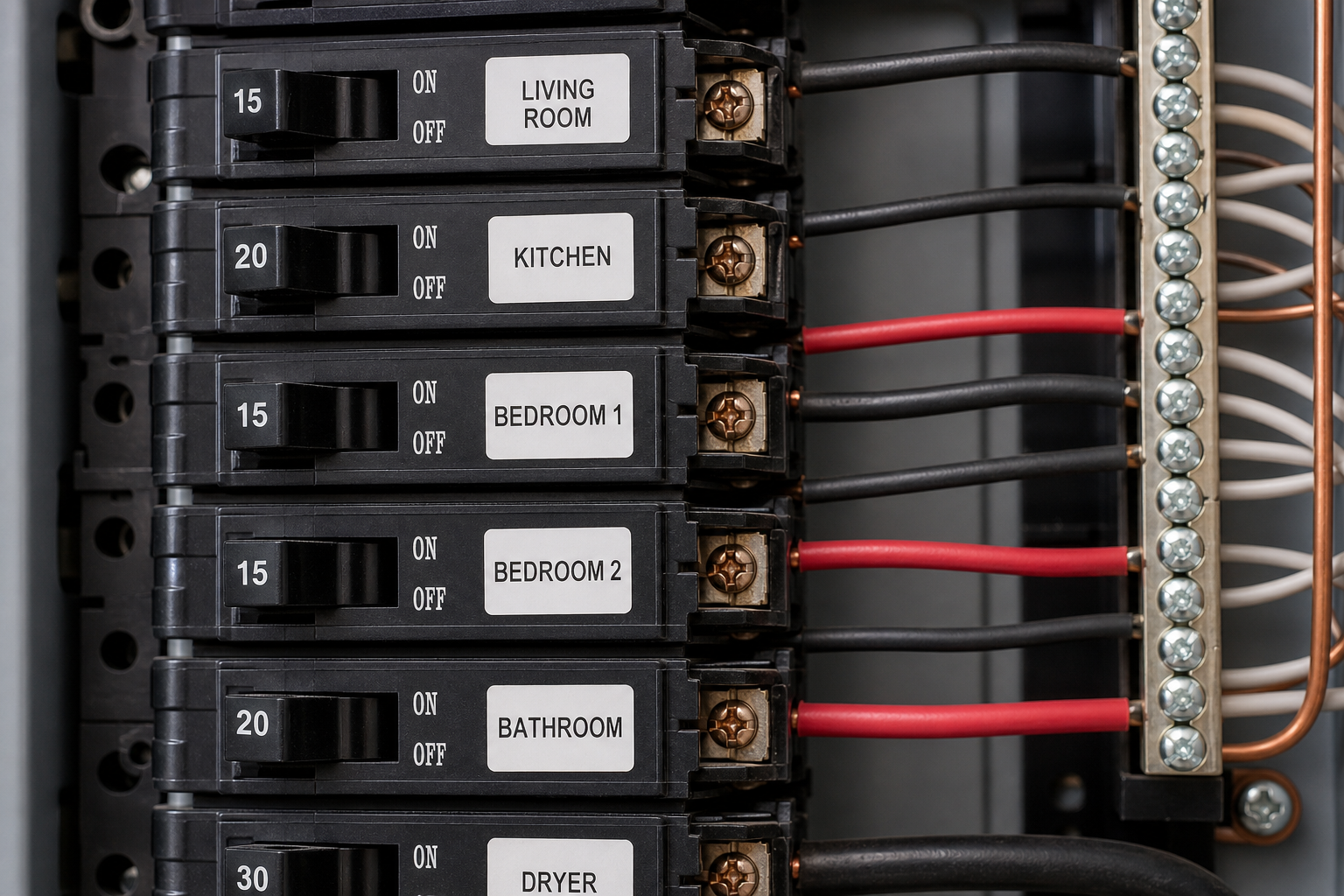
Clear labeling and organized wiring are good signs during a panel safety inspection.
Common Problems Found During a Breaker Box Inspection
Certain issues appear repeatedly during breaker box inspections, especially in older homes. Double-tapped breakers, where two wires share a single slot, are a frequent finding because they increase the risk of loose connections and overheating.
Similarly, outdated panel brands with known failure histories, such as Federal Pacific Electric or Zinsco models, remain a concern because their breakers sometimes fail to trip during an overload. The U.S. Consumer Product Safety Commission has documented safety concerns tied to certain legacy electrical equipment over the years.
Other common issues include missing or incorrect labeling, insufficient grounding, and rust from moisture intrusion near the panel. In particular, rust and corrosion often indicate a long-standing leak or ventilation problem that needs attention beyond the panel itself.
Electrical Panel Inspection for Buyers, Sellers, and Landlords
For homebuyers, a detailed electrical panel inspection is typically included as part of a comprehensive buyer’s inspection, giving you leverage to negotiate repairs before closing. In contrast, sellers often benefit from a seller’s pre-listing inspection that identifies electrical issues early, avoiding surprises that could derail a sale later.
Meanwhile, property managers overseeing multiple units rely on routine rental property inspections to catch electrical wear before tenants report problems or safety hazards escalate. Real estate professionals can also find helpful guidance in the real estate agents resource section when advising clients on inspection timing.
For a general overview of how these services fit together across the Greater Bay Area, visit 21centuryhomeinspection.com to review service areas and scheduling options.
How Much Does an Electrical Panel Inspection Cost?
Generally, a panel review bundled into a full home inspection adds little to no extra charge, since it is a standard part of the process. However, a standalone inspection focused only on the panel usually costs between $100 and $300, depending on the panel’s age, amperage, and regional labor rates.
Although this may seem like an added expense, it is modest compared to the cost of replacing a full panel, which according to industry estimates from the International Association of Certified Home Inspectors can run into the thousands of dollars depending on panel capacity and electrical code updates required.
What Is a Distribution Board and How Does It Relate to the Panel?
A distribution board, as defined on Wikipedia, is the technical term for the component most homeowners simply call the electrical panel or breaker box. It divides incoming electrical power into separate circuits while providing a protective fuse or breaker for each one.
Understanding this terminology helps homeowners follow inspection reports more easily, since inspectors sometimes use both terms interchangeably. Ultimately, whether called a panel or a distribution board, its job and inspection priorities remain the same.
Frequently Asked Questions About Electrical Panel Inspection
What is an electrical panel inspection?
An electrical panel inspection is a visual and functional review of a home’s breaker box, including its wiring, breakers, grounding, and overall condition. Inspectors check for fire hazards, outdated equipment, and code violations.
How long does an electrical panel inspection take?
Most electrical panel inspections take between 15 and 30 minutes as part of a broader home inspection. A standalone or more detailed panel evaluation can take longer if problems surface.
How much does an electrical panel inspection cost?
When bundled into a full home inspection, this check typically adds little to no extra cost. A standalone inspection focused only on the panel generally ranges from $100 to $300.
Why is an electrical panel inspection important when buying a home?
Because a damaged or outdated panel can pose a serious fire or shock risk, buyers need to know its condition before closing. It also helps buyers negotiate repairs or credits with sellers.
What are signs my electrical panel needs inspection?
Warning signs include flickering lights, warm outlets, a burning smell near the panel, frequently tripping breakers, or a recalled panel brand. Any of these should prompt a prompt professional check.
Can an electrical panel inspection detect a fire hazard?
Yes, trained inspectors look for overheating signs, loose connections, corrosion, and overloaded circuits that commonly precede electrical fires. Catching these early allows for repair before escalation.
What is the difference between a panel inspection and a full electrical inspection?
A panel inspection focuses specifically on the breaker box, wiring, and grounding. A full electrical inspection covers the entire home’s wiring, outlets, switches, and fixtures in addition to the panel.
Are Federal Pacific or Zinsco panels a safety concern?
Federal Pacific Electric and Zinsco panels have a documented history of breakers failing to trip during overloads, raising fire risk. If either brand is found, replacement is commonly recommended.
What common mistakes do homeowners make with electrical panels?
Common mistakes include double-tapping breakers, ignoring repeated tripping instead of investigating the cause, and attempting DIY repairs inside the panel without proper training.
How often should an electrical panel inspection be performed?
For most homes, an inspection every three to five years is reasonable, or sooner if warning signs appear. Rental properties benefit from more frequent checks due to tenant turnover.
Do home inspectors check electrical panels during a standard home inspection?
Yes, a licensed inspector routinely opens the panel cover and reviews breakers, wiring, and labeling as a core part of any buyer’s or seller’s inspection.
What happens if an electrical panel inspection finds problems?
The inspector documents issues in a written report with photos and recommends evaluation by a licensed electrician. Buyers can then use this report to negotiate repairs before closing.
Is an electrical panel inspection required before selling a home?
It is not always legally required, but many sellers choose a pre-listing inspection to resolve electrical issues before buyers discover them. This often prevents negotiation delays later.
Can I inspect my own electrical panel?
Homeowners can check for rust, odd smells, or tripped breakers visually, but opening the panel cover without training is dangerous. A licensed professional should handle detailed inspections.
What certifications should an electrical panel inspector have?
Look for inspectors certified through recognized bodies such as InterNACHI, along with applicable state licensing. Local experience with residential electrical systems is also valuable.
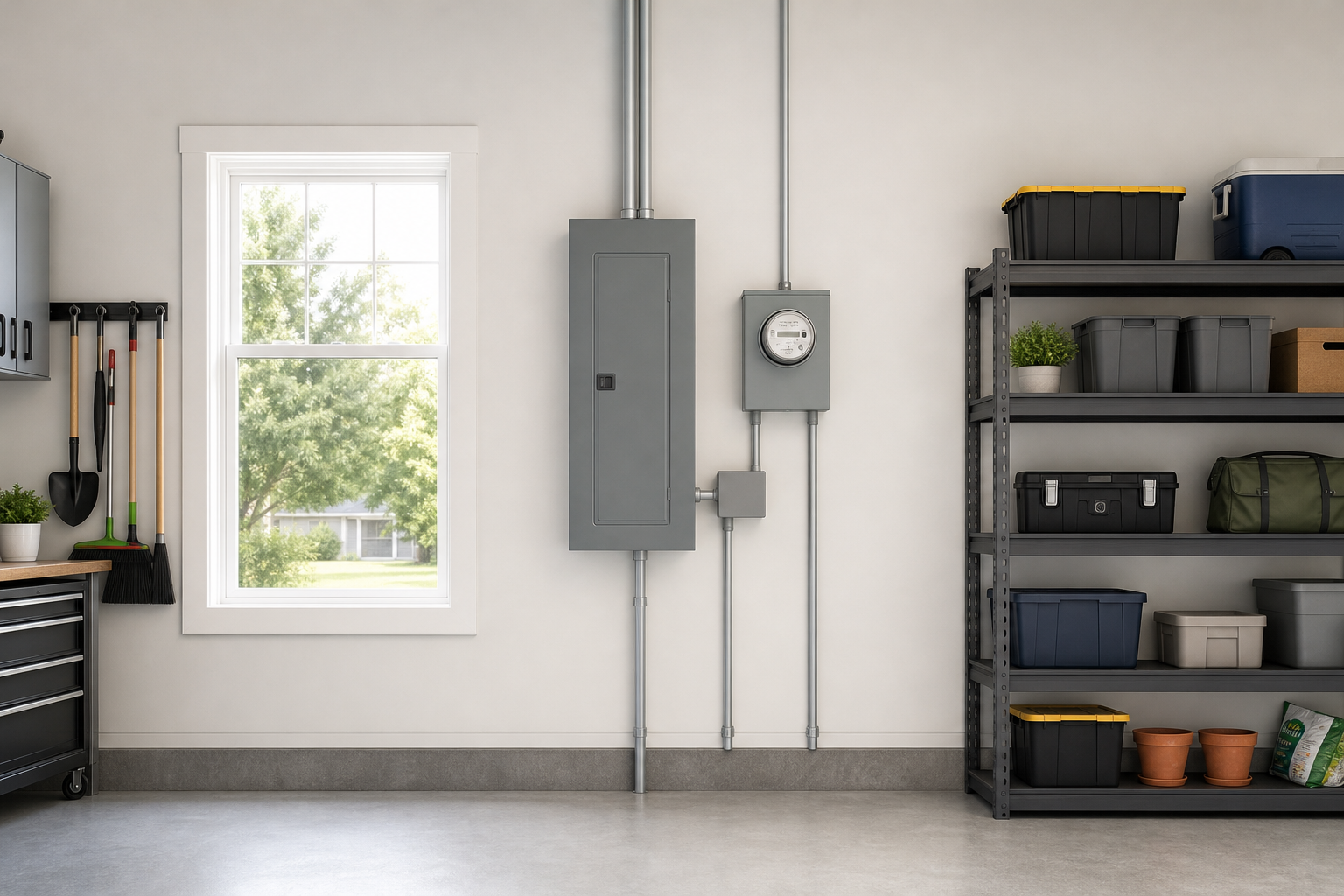
Proper clearance and clean installation support a smoother electrical panel inspection.
Final Thoughts on Electrical Panel Inspection
In summary, an electrical panel inspection is a small step that protects against some of the biggest risks a home can hide. Whether you are buying, selling, or managing rental units, checking the condition of the breaker box early gives you time to address problems before they turn into costly emergencies or safety hazards. Above all, scheduling a professional inspection, rather than guessing at the panel’s condition, remains the safest way to protect your property and the people living in it.



