
A home electrical inspection is a professional evaluation of a home’s wiring, panel, outlets, and fixtures to identify fire hazards, code violations, and safety risks before they cause harm. Whether you are buying a house, selling one, or simply want peace of mind, this inspection matters because faulty wiring remains one of the leading causes of residential fires in the United States. In this guide, we’ll explain what a home electrical inspection covers, how much it typically costs, and how to prepare for one.
Quick Answer: A home electrical inspection checks the main panel, wiring condition, outlets, switches, and grounding to catch fire hazards and outdated systems early. It usually takes 30 to 60 minutes as part of a general home inspection, or longer for a standalone electrical-only review.
What Is a Home Electrical Inspection?
A home electrical inspection is a visual review of the electrical system’s safety and condition, performed by an inspector trained to recognize code violations and hazards. During the visit, the inspector examines the main panel, breakers, visible wiring, outlets, light fixtures, and major appliance connections.
Unlike a full electrical audit, a standard home electrical inspection does not involve opening walls or testing every circuit with specialized meters. Instead, it focuses on visible, accessible components to flag red flags that warrant further review by a licensed electrician. As a result, it offers a practical first step for buyers, sellers, and property managers who need a quick but reliable safety snapshot.
Why This Inspection Matters for Buyers and Sellers
According to the National Fire Protection Association, electrical failures or malfunctions account for roughly 13% of reported home structure fires in the United States each year. Because of this, a thorough electrical review protects both personal safety and property value.
For buyers, an inspection can reveal hidden issues before closing, giving leverage to negotiate repairs or price adjustments. Our buyer’s inspection service includes a full electrical system review alongside other major components. For sellers, meanwhile, a pre-listing inspection helps avoid surprises that could derail a sale later. Real estate agents can learn more about guiding clients through this process on our real estate agents resource page.
What Does an Electrical Safety Inspection Cover?
Specifically, an electrical safety inspection typically covers several key areas of the home’s system. Below is a general breakdown of what inspectors usually check:
- Main service panel, breaker condition, and labeling accuracy
- Grounding and bonding of the electrical system
- Outlets, including ground-fault circuit interrupter (GFCI) protection near water sources
- Visible wiring condition in the attic, basement, and garage
- Light fixtures, switches, and ceiling fan connections
- Smoke detector and carbon monoxide alarm placement and function
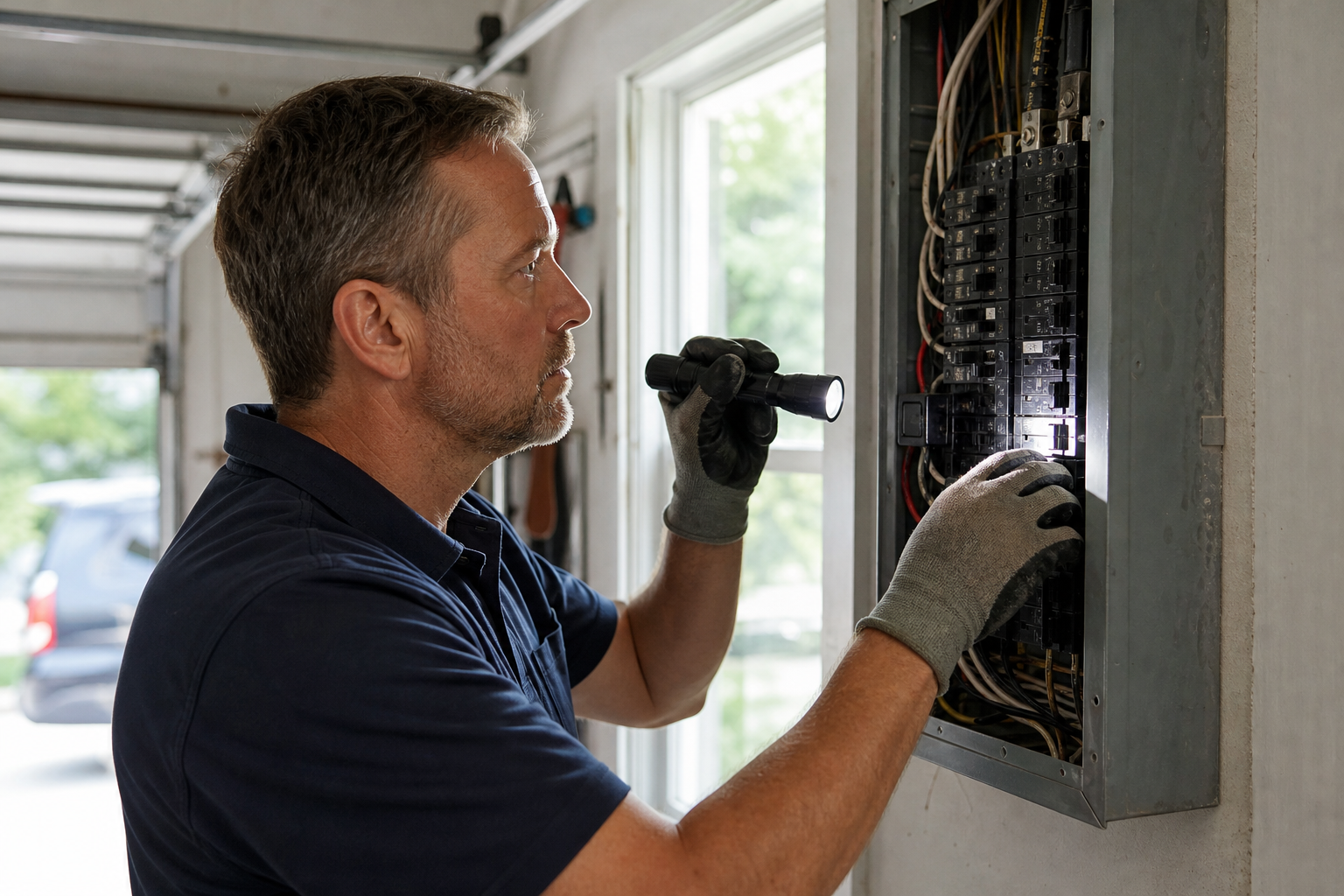
A thorough home electrical inspection starts with a close look at the main panel and breakers.
Common Problems a Residential Electrical Inspection Uncovers
Experienced inspectors see recurring issues across homes of different ages. For instance, older properties often have outdated fuse boxes or aluminum wiring that no longer meets modern safety standards. In contrast, newer homes may have overloaded circuits from added appliances or poorly installed DIY fixtures.
Other frequent findings include missing GFCI outlets in kitchens and bathrooms, double-tapped breakers, exposed wiring in attics, and improperly grounded systems. The Electrical Safety Foundation International notes that many home electrical fires stem from issues that are preventable with routine inspection and maintenance. Consequently, identifying these problems early can save homeowners thousands of dollars in repair costs and insurance claims.
How to Prepare for Your Home Electrical Inspection
Preparation helps the inspection go smoothly and ensures the inspector can access every important area. Follow these steps before your scheduled visit:
- Clear access to the electrical panel. Remove furniture, boxes, or stored items blocking the panel so the inspector can open it without delay.
- Test outlets and switches beforehand. Plug in a lamp or phone charger at each outlet and flip switches, noting anything that fails.
- List known issues and past repairs. Mention flickering lights, tripped breakers, or prior electrical work so the inspector can focus there.
- Secure pets and clear work areas. Keep pets in a separate room and clear paths to the attic, garage, and exterior outlets.
- Gather permits and documentation. Collect receipts or permits for past electrical work so the inspector can verify it meets code.
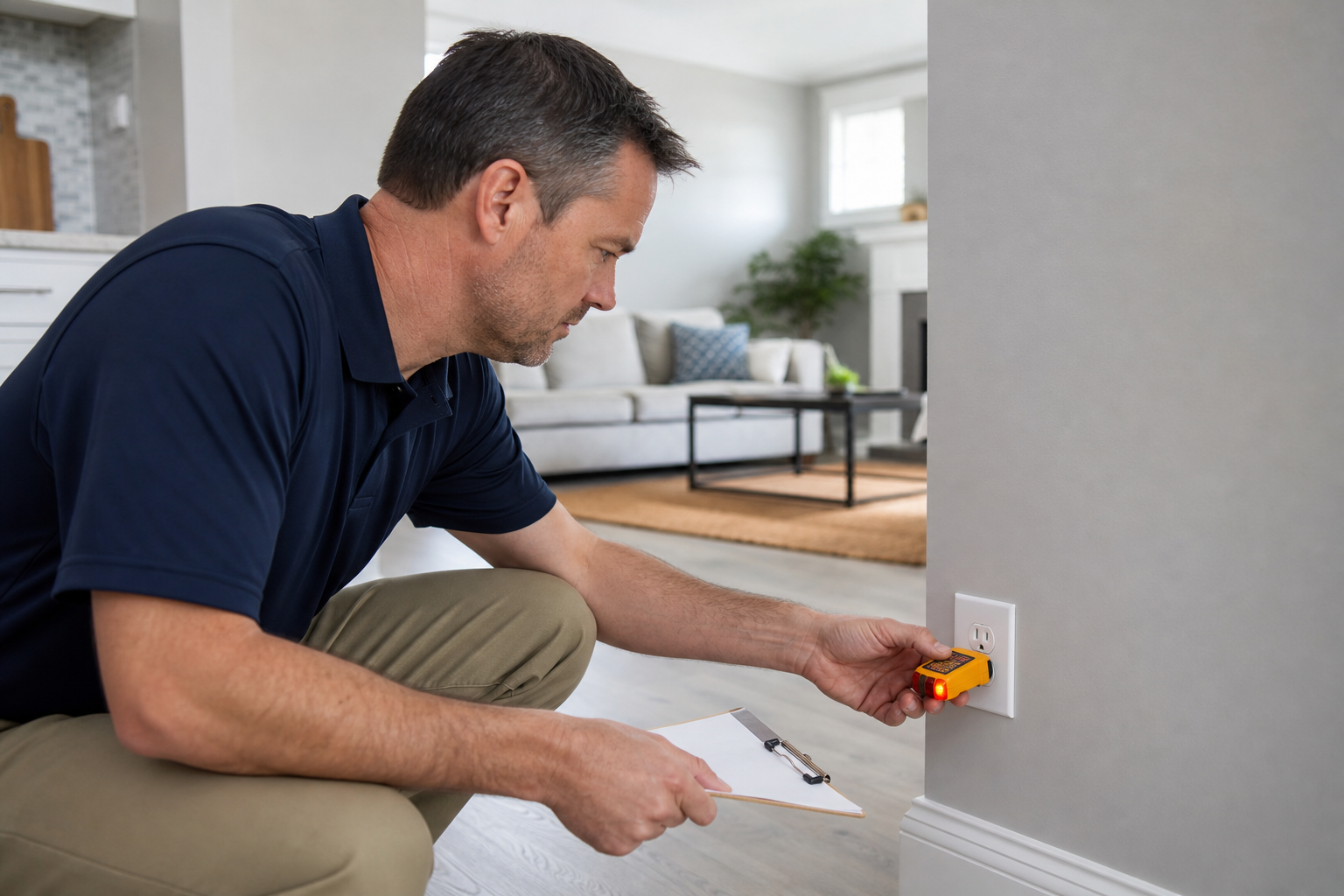
Testing outlets and GFCI protection is a routine part of the inspection checklist.
How Much Does a Home Electrical Inspection Cost?
Cost varies depending on whether the electrical review is part of a full home inspection or a standalone service. Generally, when bundled into a complete home inspection, there is little to no added cost. However, a standalone electrical-only inspection by a licensed electrician typically ranges from 150 to 400 dollars, depending on home size, age, and location.
Older homes in the Bay Area, for example, may require additional time to evaluate knob-and-tube wiring or outdated panels, which can push costs toward the higher end. Despite the expense, most homeowners find the investment worthwhile compared to the potential cost of an undetected electrical fire or failed home sale.
Choosing a Qualified Inspector for Your Home’s Electrical System
Not all inspectors have the same level of electrical training. Therefore, it helps to ask about certifications, experience with homes similar to yours, and whether they carry errors and omissions insurance. A qualified inspector should also provide a clear, detailed written report rather than a vague checklist.
At 21st Century Home Inspection, our inspections cover the electrical system alongside foundations, roofing, HVAC, plumbing, and structural elements across Alameda, Contra Costa, Solano, and San Joaquin counties. You can also browse real walkthrough examples on our inspection videos page to see what a typical visit looks like before booking.

After the home electrical inspection, clients review findings and recommended next steps together.
Frequently Asked Questions About Home Electrical Inspection
What is a home electrical inspection?
A home electrical inspection is a visual evaluation of a home’s wiring, panel, outlets, switches, and fixtures performed by a trained inspector to identify safety hazards and code concerns. It does not require opening walls or performing invasive testing.
How long does a home electrical inspection take?
Most home electrical inspections take 30 to 60 minutes when done as part of a full home inspection. A standalone, more detailed electrical inspection by a licensed electrician may take one to two hours depending on the home’s size and age.
How much does a home electrical inspection cost?
A home electrical inspection included in a general home inspection typically adds little to no extra cost, while a standalone electrical-only inspection usually ranges from 150 to 400 dollars depending on home size and location. Older homes with outdated wiring may cost more to evaluate thoroughly.
What are common electrical problems found during inspections?
Inspectors frequently find outdated fuse boxes, missing ground-fault circuit interrupter outlets near water sources, overloaded circuits, and exposed or damaged wiring. Double-tapped breakers and missing panel labels are also common findings.
Is a home electrical inspection required when buying a house?
A home electrical inspection is not legally required in most areas, but it is strongly recommended before buying a house. Lenders and insurers sometimes require repairs on serious electrical hazards found during the inspection before closing.
How is a home electrical inspection different from a general home inspection?
A general home inspection covers the electrical system as one of several components, alongside the roof, plumbing, and HVAC. A standalone electrical inspection digs deeper into wiring condition, panel capacity, and code compliance with a licensed electrician.
What are signs my home needs an electrical inspection?
Flickering lights, warm outlets, frequently tripped breakers, and a burning smell near the panel are all warning signs. Homes older than 40 years or those with recent renovations also benefit from a professional electrical inspection.
How often should I get a home electrical inspection?
Most homeowners should schedule a home electrical inspection every three to five years, or sooner if warning signs appear. Homes over 25 years old benefit from more frequent checks due to aging wiring and components.
What mistakes do homeowners make before an inspection?
A common mistake is blocking access to the electrical panel with furniture or storage, which delays the inspection. Another mistake is failing to mention past electrical repairs or DIY work, which can hide important history from the inspector.
Can I do my own electrical inspection?
Homeowners can perform a basic visual check for obvious issues like warm outlets or tripped breakers, but a full home electrical inspection requires training to spot hidden hazards safely. Professional inspectors know code requirements and safe testing methods that most homeowners do not.
What happens after a home electrical inspection finds problems?
The inspector provides a written report detailing each issue, its severity, and recommended next steps. Buyers often use this report to negotiate repairs or credits, while sellers can address issues before listing.
Does a home electrical inspection check smoke detectors?
Yes, most home electrical inspections include checking smoke detector placement, function, and battery status as part of overall safety evaluation. Carbon monoxide detectors are often reviewed at the same time.
What qualifications should a home electrical inspector have?
Look for inspectors certified by a recognized home inspection association with specific training in electrical systems. Experience with homes similar in age and construction to yours is also valuable. You can find more general inspection questions answered on our FAQ page.
In summary, a home electrical inspection is one of the most valuable steps a buyer, seller, or property manager can take to protect a home and its occupants. From checking the main panel to testing outlets and reviewing wiring condition, this process catches hazards early and supports safer, more informed real estate decisions. Scheduling a professional inspection, understanding typical costs, and preparing the home beforehand all help ensure accurate, reliable results. For homes across the Greater Bay Area, a qualified home electrical inspection provider can give you the clarity needed to move forward with confidence, whether you are closing on a purchase or preparing to list.



