
Attic inspection services give homeowners, buyers, and property managers a professional look at one of the most overlooked spaces in any house. Hidden under the roofline, the attic often hides insulation gaps, ventilation problems, water damage, and even pest activity that go unnoticed until they cause real trouble. For anyone buying, selling, or managing property in the Greater Bay Area, understanding what this service covers can prevent expensive surprises down the road.
Direct answer: Attic inspection services are a professional visual and technical review of an attic’s insulation, ventilation, framing, wiring, and moisture condition, performed to identify safety hazards, energy losses, and structural issues before they become costly repairs.
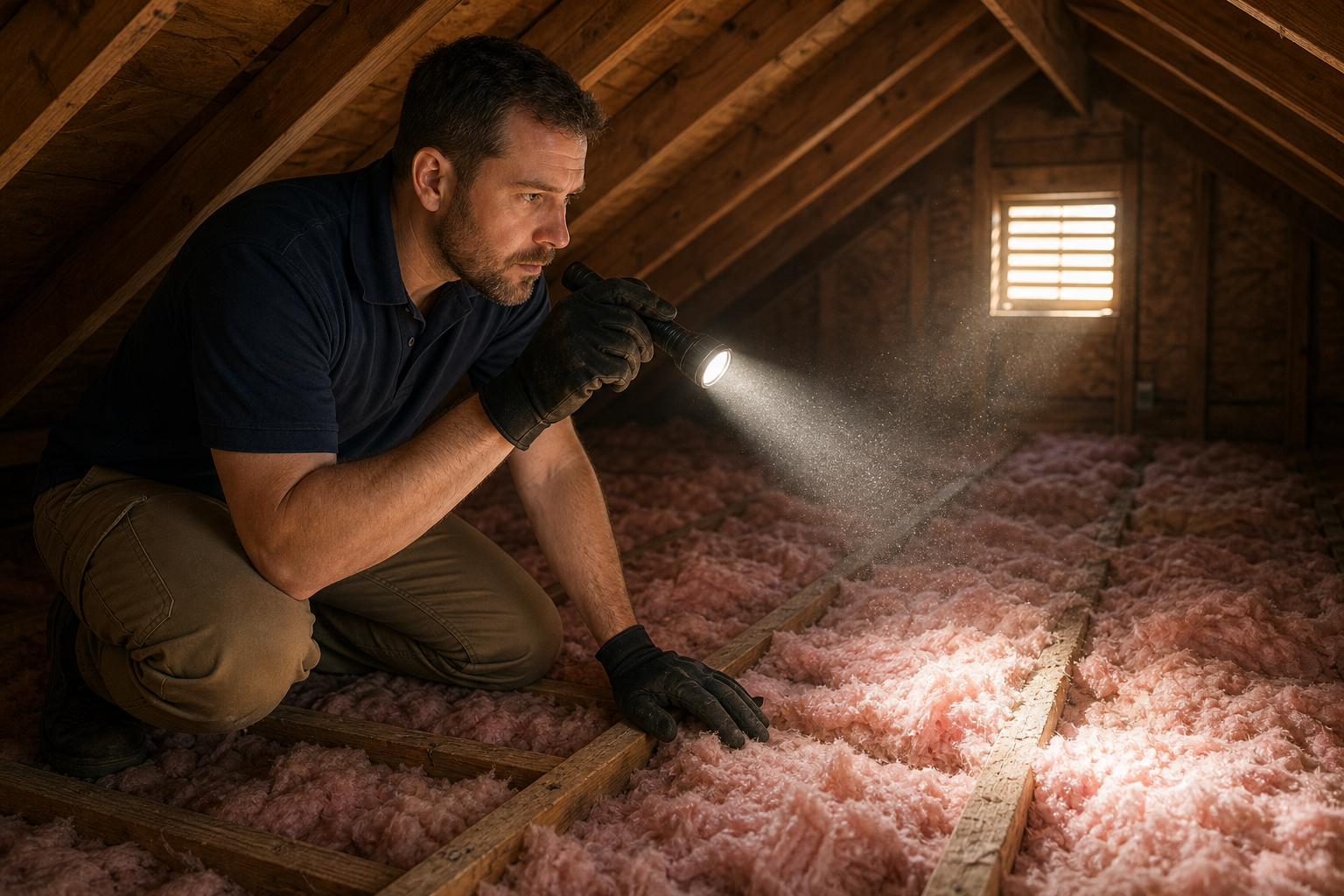
Attic inspection services include a close look at insulation coverage and depth to spot energy loss.
What Are Attic Inspection Services?
Attic inspection services are a focused evaluation of a home’s attic space, covering insulation, ventilation, structural framing, and any visible signs of damage. In short, an inspector climbs into the attic, examines every accessible surface, and documents conditions that could affect the home’s safety, energy efficiency, or value.
Unlike a quick glance through an access hatch, a professional attic evaluation follows a consistent checklist. Specifically, the inspector reviews roof decking from the underside, measures insulation depth, checks for proper airflow, and looks closely for moisture staining or pest droppings. As a result, buyers and sellers receive documented evidence of the attic’s true condition rather than a guess.
This service is often bundled into a buyer’s home inspection, but it can also be requested as a standalone check for sellers preparing to list or landlords managing rental turnovers.
Why Attic Inspections Matter for Bay Area Homes
Attic inspections matter because the Bay Area’s older housing stock, varied microclimates, and recent severe-weather years have made attic condition a real factor in home value and comfort. For example, homes in foggy coastal zones face different moisture risks than those in warmer inland valleys like Contra Costa or San Joaquin County.
Furthermore, poor attic insulation directly drives up energy bills. According to the U.S. Department of Energy, homes with inadequate attic insulation and air sealing can lose a substantial share of heating and cooling energy through the roofline, making this one of the highest-impact areas for efficiency upgrades (Department of Energy).
In addition, undetected moisture in an attic can lead to mold growth, which the EPA identifies as a potential indoor air quality and health concern in homes with excess dampness (EPA). Consequently, catching these issues early through attic inspection services protects both property value and occupant health.
What Happens During a Professional Attic Evaluation
A professional attic evaluation follows a clear sequence so nothing important gets missed. Below is the typical process our inspectors use across Alameda, Contra Costa, Solano, and San Joaquin counties.
- Schedule access and review the property. The inspector confirms attic access points and reviews the home’s age, roof type, and any reported concerns before entering.
- Assess insulation and ventilation. Insulation depth is measured, and soffit and ridge vents are checked for blockages that limit airflow.
- Check for moisture, mold, and pest activity. A flashlight and moisture meter help locate water stains, active leaks, mold, or rodent droppings.
- Inspect wiring, ductwork, and framing. Exposed wiring, HVAC ducts, and roof framing are examined for damage or sagging.
- Document findings in a written report. Photos and notes are compiled into a report with clear repair recommendations.
Therefore, by the end of the visit, clients receive a complete picture of attic health rather than a verbal summary alone.
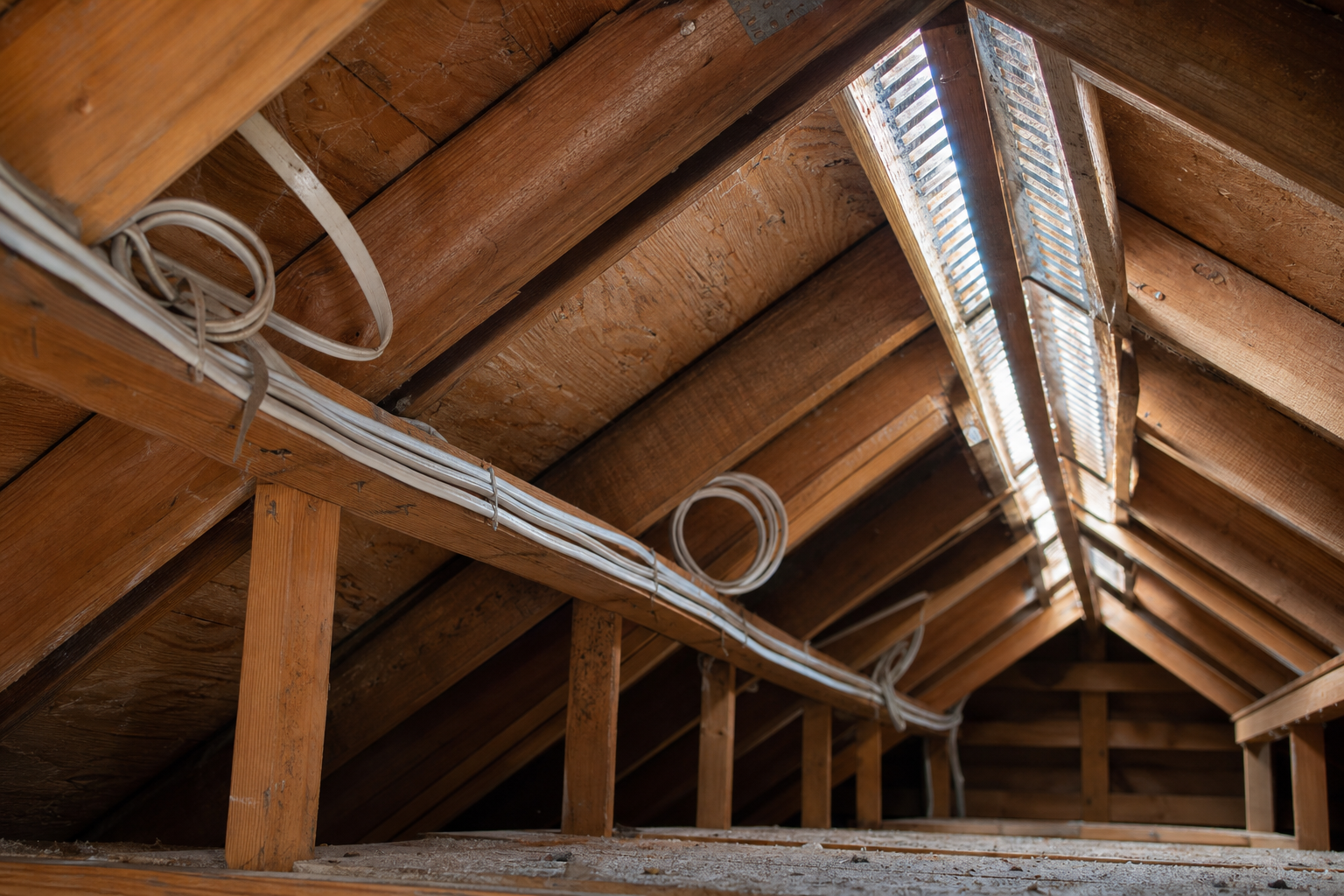
Ventilation checks are a core part of any thorough attic inspection.
Common Attic Problems Our Inspectors Find
Certain issues show up again and again during attic visits across the East Bay. The table below summarizes the most frequent findings and why they matter.
| Issue | Common Signs | Potential Impact |
|---|---|---|
| Insufficient insulation | Thin or patchy coverage, visible joists | Higher energy bills, temperature swings |
| Roof leaks | Water stains, soft decking | Mold growth, wood rot |
| Poor ventilation | Blocked vents, trapped heat | Premature roof wear, moisture buildup |
| Pest activity | Droppings, chewed wiring | Fire risk, further infestation |
Attic Inspection Services vs. DIY Attic Checks
Some homeowners wonder whether hiring attic inspection services is really necessary when they could just look themselves. However, a DIY check usually covers only what’s easy to see near the access hatch, missing corners, low clearance areas, and hidden wiring runs.
In contrast, a trained inspector knows where problems typically hide and uses tools like moisture meters and sometimes thermal cameras to spot issues invisible to the naked eye. Similarly, a professional report carries more weight during real estate negotiations than a homeowner’s personal notes.
For property managers overseeing multiple rental units, this difference matters even more. Consistent, documented attic checks protect against liability and support lease compliance across a portfolio.
How Much Do Attic Inspections Cost?
Standalone attic inspections generally range from $100 to $250, though many clients find attic checks already included within a full home inspection at no added cost. Pricing depends on attic size, roof pitch, and accessibility.
Above all, the cost of an inspection is small compared to the price of an undiscovered roof leak or insulation failure. As a result, most real estate professionals treat this service as a standard part of due diligence rather than an optional add-on.
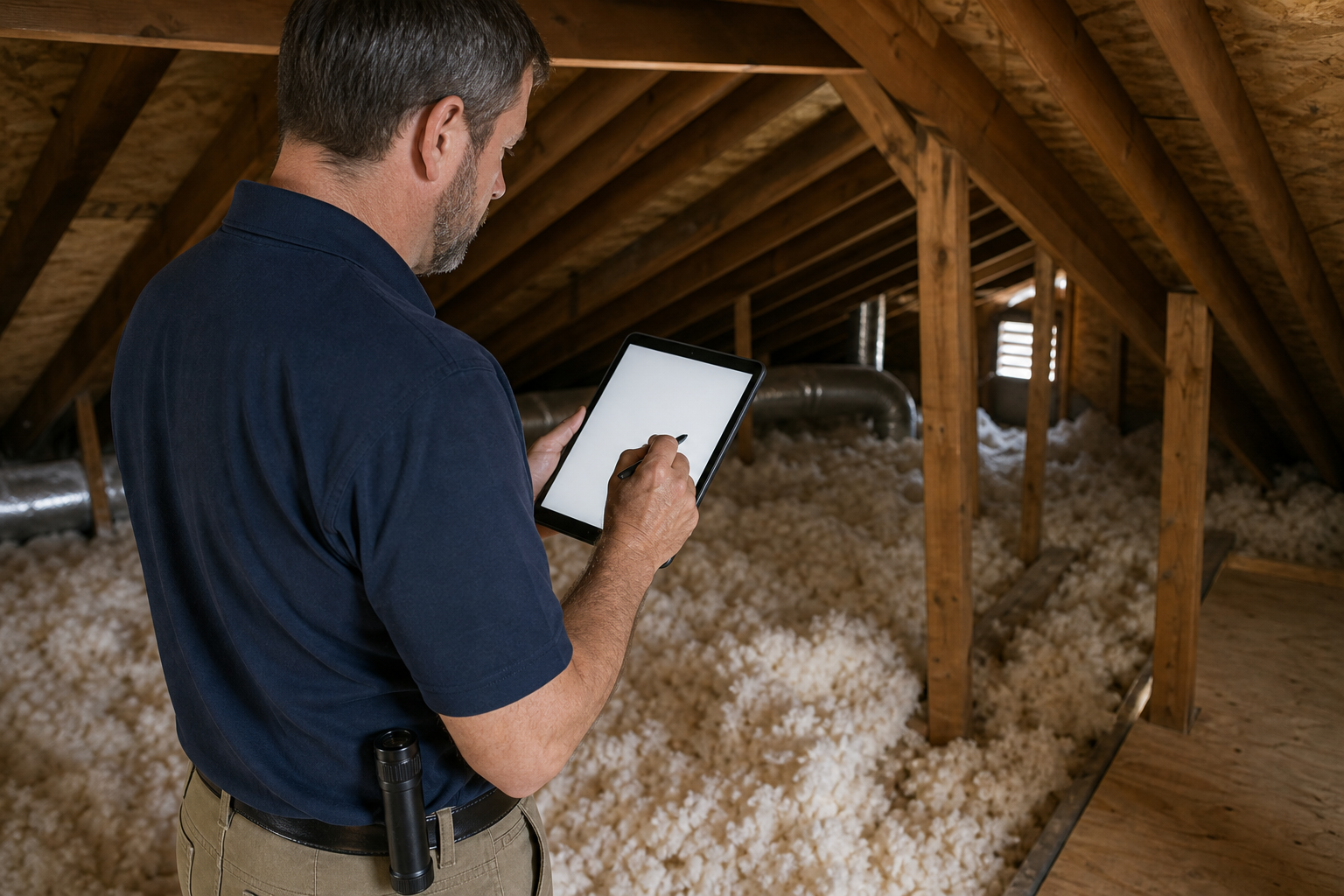
Detailed documentation turns an attic walkthrough into a usable report for buyers and sellers.
Choosing the Right Attic Inspection Company in the Bay Area
Choosing the right provider starts with experience across the specific challenges of the region. 21st Century Home Inspection serves Alameda, Contra Costa, Solano, and San Joaquin counties, covering attics alongside foundations, roofs, HVAC, and plumbing systems for a complete picture of the home.
Likewise, it helps to work with a company familiar with both residential and commercial property inspections, since multi-unit buildings often have more complex attic and roof access requirements. Learn more about the team’s background on the company overview page, and review the full scope of services on the services page before booking.
Finally, ask whether the report includes photos, repair priority ratings, and a walkthrough summary. These details make the difference between a vague checklist and a genuinely useful document for negotiations or maintenance planning.
Frequently Asked Questions About Attic Inspection Services
What are attic inspection services?
Attic inspection services are a professional evaluation of a home’s attic space, covering insulation, ventilation, roof framing, electrical wiring, and signs of moisture, mold, or pest activity. A licensed inspector documents findings with photos and a written report so buyers, sellers, or property managers understand the attic’s true condition.
How long does an attic inspection take?
Most attic inspections take between 20 and 45 minutes, depending on attic size and accessibility. Attics with limited access panels or extensive storage can take longer to fully evaluate.
Why is attic insulation important for energy efficiency?
Attic insulation keeps conditioned air inside the home, reducing strain on the HVAC system. Proper insulation and air sealing can meaningfully cut heating and cooling costs in homes where coverage is currently inadequate.
How much do attic inspection services cost in the Bay Area?
Standalone attic inspections typically range from $100 to $250 depending on attic size and access, while an attic check is often included in a full home inspection at no extra charge. Pricing can vary based on property size and whether thermal imaging is included.
What’s the difference between an attic inspection and a full home inspection?
A full home inspection covers the entire property, including the roof, foundation, plumbing, and electrical systems, while an attic inspection focuses specifically on insulation, ventilation, and structural elements within the attic space. Most buyer’s and seller’s inspections include the attic as one component of the broader evaluation.
Can I inspect my own attic instead of hiring a professional?
Homeowners can do a basic visual check, but DIY attic checks often miss hidden moisture, early mold growth, or wiring hazards that require trained eyes and proper equipment. A professional inspector also provides documentation that real estate transactions and insurers may require.
What are common mistakes homeowners make when checking their attic?
Common mistakes include skipping hard-to-reach corners, overlooking ventilation blockages, and mistaking minor staining for a resolved leak. Homeowners also frequently miss early signs of rodent activity hidden beneath insulation.
How often should a home get an attic inspection?
An attic inspection is recommended at least once every one to two years, or immediately after a roof leak, storm damage, or before listing a home for sale. Rental properties benefit from periodic attic checks between tenant turnovers as well.
What signs indicate I need an attic inspection soon?
Musty odors, visible water stains on ceilings, rising energy bills, or scratching sounds overhead are all signs a home may need an attic inspection soon. Daylight visible through the roof deck is another red flag worth checking promptly.
Do attic inspections check for pests and rodents?
Yes, attic inspection services typically look for droppings, nesting material, chewed wiring, and entry points that indicate rodent or insect activity. If significant pest damage is found, inspectors usually recommend a specialized termite or pest control evaluation.
What tools do inspectors use during an attic evaluation?
Inspectors commonly use flashlights, moisture meters, thermal imaging cameras, and protective gear to safely move through the attic space. These tools help detect hidden leaks, insulation gaps, and temperature irregularities that aren’t visible to the naked eye.
Are attic inspections required when buying a home?
Attic inspections are not legally required, but they are strongly recommended and are typically part of a standard buyer’s home inspection. Skipping this step can leave costly insulation, structural, or moisture issues undiscovered until after closing.
What happens if mold is found during an attic inspection?
If mold is found, the inspector documents its location and extent in the report and recommends further evaluation or remediation by a qualified specialist. Addressing the moisture source causing the mold is essential to prevent it from returning.
Final Thoughts on Attic Inspection Services
In summary, attic inspection services offer a clear, documented view of a part of the home that’s easy to ignore but costly to overlook. From insulation and ventilation to moisture and pest signs, these checks protect buyers, sellers, and property managers across the Bay Area from unpleasant surprises. Whether you’re closing on a new home, listing a property, or managing a rental, scheduling a professional attic inspection is a small step that can prevent much bigger headaches later. For additional background on attics as building spaces, the Wikipedia overview offers useful general context alongside the practical guidance above.



